

Why I Feel Disconnected From Myself
Have you ever looked at your life and realized that somewhere along the way, you stopped feeling like yourself?
Maybe you're showing up for work. Taking care of responsibilities. Checking all the boxes.
Yet underneath it all, you've been wondering, "Why I feel disconnected from myself?"
If you've been asking yourself why do I feel disconnected from myself, you're not alone. Many people experience seasons where they feel disconnected from their emotions, their needs, or the person they once recognized. At Intima Couples and Sex Therapy in Lakewood, Colorado, we often remind clients that feeling disconnected from yourself doesn't mean you've lost who you are. More often, it means life has created distance between you and the parts of yourself that know what you need, what you value, and what feels true.
The encouraging news is that connection can be rebuilt—with curiosity, compassion, and emotional safety.
What Does It Mean to Feel Disconnected From Yourself?
When people describe feeling disconnected from myself, they often struggle to explain exactly what they mean.
They might say:
"I don't know what I want anymore."
"I don't feel like myself."
"I'm just going through the motions."
"I don't know who I am anymore."
Many people assume they've somehow lost themselves.
But that isn't usually what's happened.
Your authentic self hasn't disappeared.
The connection has simply become more difficult to access.
The parts of you that know what matters.
The parts of you that know what you need.
The parts of you that help you feel grounded and alive.
They're still there.
Sometimes life simply creates enough distance that they become harder to hear.
Why Do I Feel Disconnected From Myself?
One of the most important things to understand is that disconnection is often an adaptation—not a personal failure.
Our nervous systems are designed to help us survive.
When life becomes overwhelming, our attention naturally shifts toward managing responsibilities, solving problems, and keeping everything together.
Over time, we may become so focused on surviving that we slowly stop checking in with ourselves.
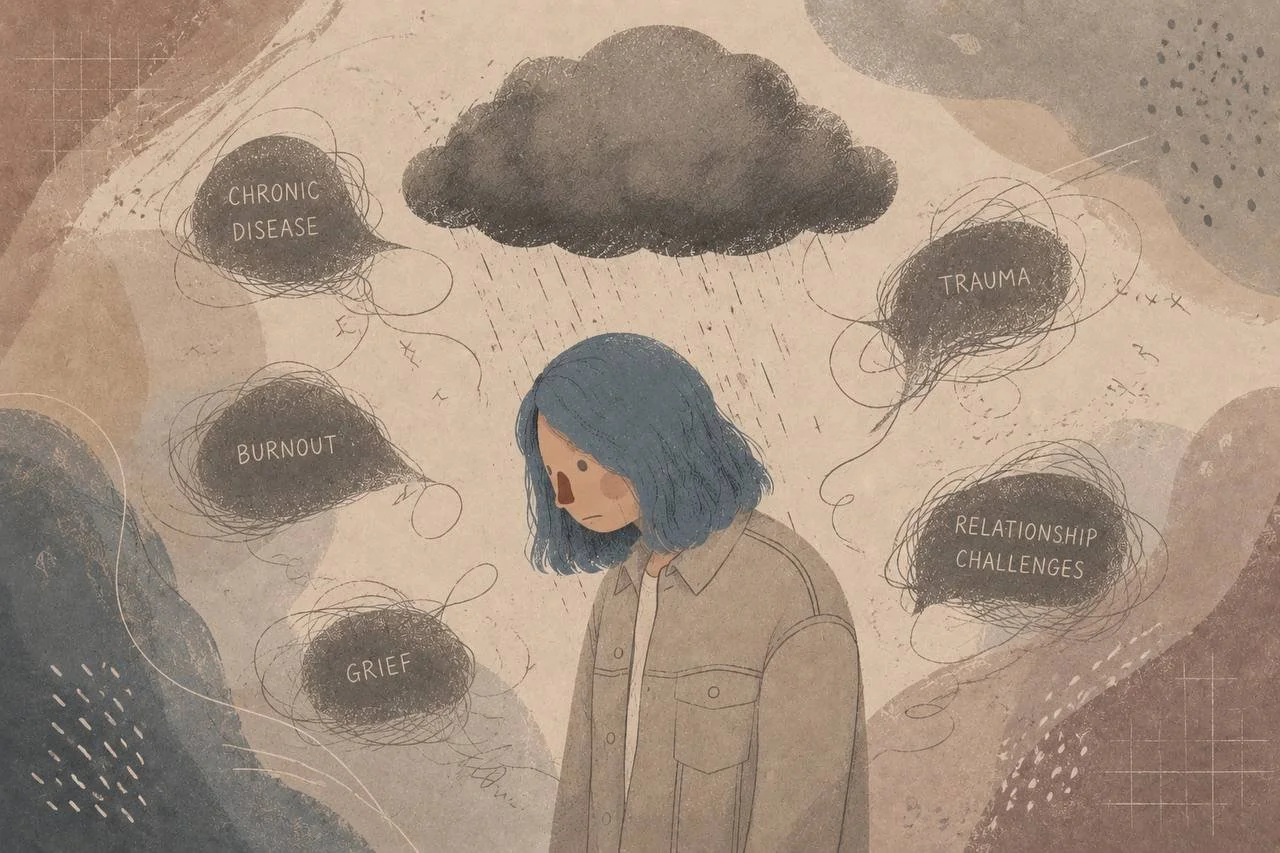
This can happen after:
Chronic stress
Burnout
Grief
Relationship challenges
Caring for everyone else's needs before your own
Years of meeting expectations instead of expressing authenticity
If you've been wondering, "Why do I feel lost and disconnected?", it may simply be that your nervous system has spent a long time protecting you.
Feeling disconnected isn't always a sign that something is wrong.
Sometimes it's a sign that you've been carrying a great deal for a very long time.
Sign You Are Disconnected From Yourself
The signs you are disconnected from yourself aren't always dramatic.
Sometimes they're so subtle they become your normal.
You may notice:
Difficulty making decisions because you no longer trust your own judgment.
Constantly seeking reassurance from others.
Feeling emotionally numb.
Feeling restless even when life seems "fine."
Feeling disconnected in relationships.
Living on autopilot instead of feeling present.
Wondering why you don't feel like yourself anymore.
Pause for a moment and ask yourself:
When was the last time you checked in with yourself—not to judge yourself or fix yourself—but simply to listen?
For many people, it's been much longer than they realize.
Why Reconnecting With Yourself Feels So Difficult
If reconnecting with ourselves is so important, why does it feel so hard?
Because slowing down often means noticing what we've been carrying.
Grief.
Fear.
Disappointment.
Longing.
Needs we've ignored.
Many people assume they're avoiding themselves because they don't care.
In reality, they're often avoiding experiences that feel painful, uncertain, or overwhelming.
This is why emotional safety matters.
Healing doesn't begin by forcing insight.
It begins by creating enough safety to notice what's already there.
Self-awareness isn't something we can pressure ourselves into.
It grows through curiosity.
Through slowing down.
Through giving ourselves permission to listen without immediately trying to solve or change what we find.
How to Reconnect With Yourself
If you've been wondering how to reconnect with yourself, remember that healing rarely begins with a complete life overhaul.
Instead, it often starts with small moments of attention.
Try asking yourself:
What do I need today?
What am I longing for?
What feels true for me?
Notice how different these questions feel from asking, "What's wrong with me?"
One invites judgment.
The other invites curiosity.
Simple daily practices can also help you begin reconnecting with yourself, including:
Journaling without expectation.
Sitting quietly with your morning coffee.
Taking a walk without distractions.
Practicing meditation.
Pausing throughout the day to notice your thoughts and emotions.
These small moments help you feel connected to yourself again because they strengthen your relationship with your inner experience.
Healing isn't about becoming someone new.
It's about how to reconnect with who you are beneath stress, survival, and expectations.
Reconnecting Is a Relationship, Not a Destination
Many people searching for how to find yourself again imagine there will be one breakthrough moment where everything suddenly makes sense.
But reconnecting with yourself isn't a finish line.
It's an ongoing relationship.
Some days you'll feel deeply connected.
Other days you may feel distant.
Neither experience defines you.
Each moment of curiosity.
Each compassionate pause.
Each opportunity to listen without judgment becomes another step back toward yourself.
Over time, those small moments begin to strengthen self-trust and deepen your connection with your emotions, your body, and your values.
Internal Resources for Healing and Support
If this article resonated with you, you don't have to navigate this journey alone. At Intima Couples and Sex Therapy, we provide trauma-informed, evidence-based therapy that helps individuals reconnect with themselves, build emotional awareness, and create lasting healing.
Our Therapy Services
Individual Therapy – Explore the patterns that have pulled you away from yourself while rebuilding self-trust, emotional awareness, and resilience.
Couples Therapy– Deepen emotional connection, improve communication, and better understand yourself within your relationships.
Ketamine-Assisted Psychotherapy (KAP)– For some individuals, Ketamine-Assisted Psychotherapy offers an opportunity to support deeper emotional healing when thoughtfully integrated with psychotherapy.
A gentle companion for rebuilding self-awareness and reconnecting with your inner voice.
If you've been asking yourself why you feel disconnected from yourself, this free workbook offers a compassionate place to begin.
Sometimes we don't lose ourselves.
We simply lose touch with ourselves after years of stress, caregiving, trauma, or constantly meeting life's demands.
Reconnecting doesn't happen through pressure.
It happens through curiosity.
Through creating enough emotional safety to listen inward again.
This workbook was created to accompany the Journey Back to Yourself series and includes gentle exercises designed to help you reconnect with yourself at your own pace.
Maybe you've been moving through life on autopilot.
Maybe you're taking care of everyone else and have lost touch with what you need.
Maybe you know something feels off, but you can't quite put words to it.
If you've been wondering how to reconnect with yourself or why you don't feel like yourself anymore, you're not alone.
This free workbook will help you slow down, reconnect with your inner world, and begin building a deeper relationship with yourself through reflection, self-awareness, and self-compassion.
You can also download our complimentary booklet, Creating Safety for Insight, to continue exploring emotional safety, nervous system regulation, and healing.
Why I Feel Disconnected From Myself in Lakewood, Colorado
If you've been wondering, "Why do I feel disconnected from myself?", know that you're not alone.
Feeling disconnected from yourself doesn't mean you've lost who you are.
More often, it means life has required so much of you that you've become separated from the parts of yourself that know what you feel, what you need, and what matters most.
At Intima Couples and Sex Therapy in Lakewood, Colorado, we help individuals understand how emotional safety, self-awareness, trauma-informed therapy, and nervous system regulation support lasting healing and deeper self-connection.
Whether you're just beginning your self-discovery journey or looking for additional support, healing starts by creating enough space to listen inward.
You haven't lost yourself.
You're simply finding your way back—one moment of curiosity, one act of self-compassion, and one gentle step at a time.